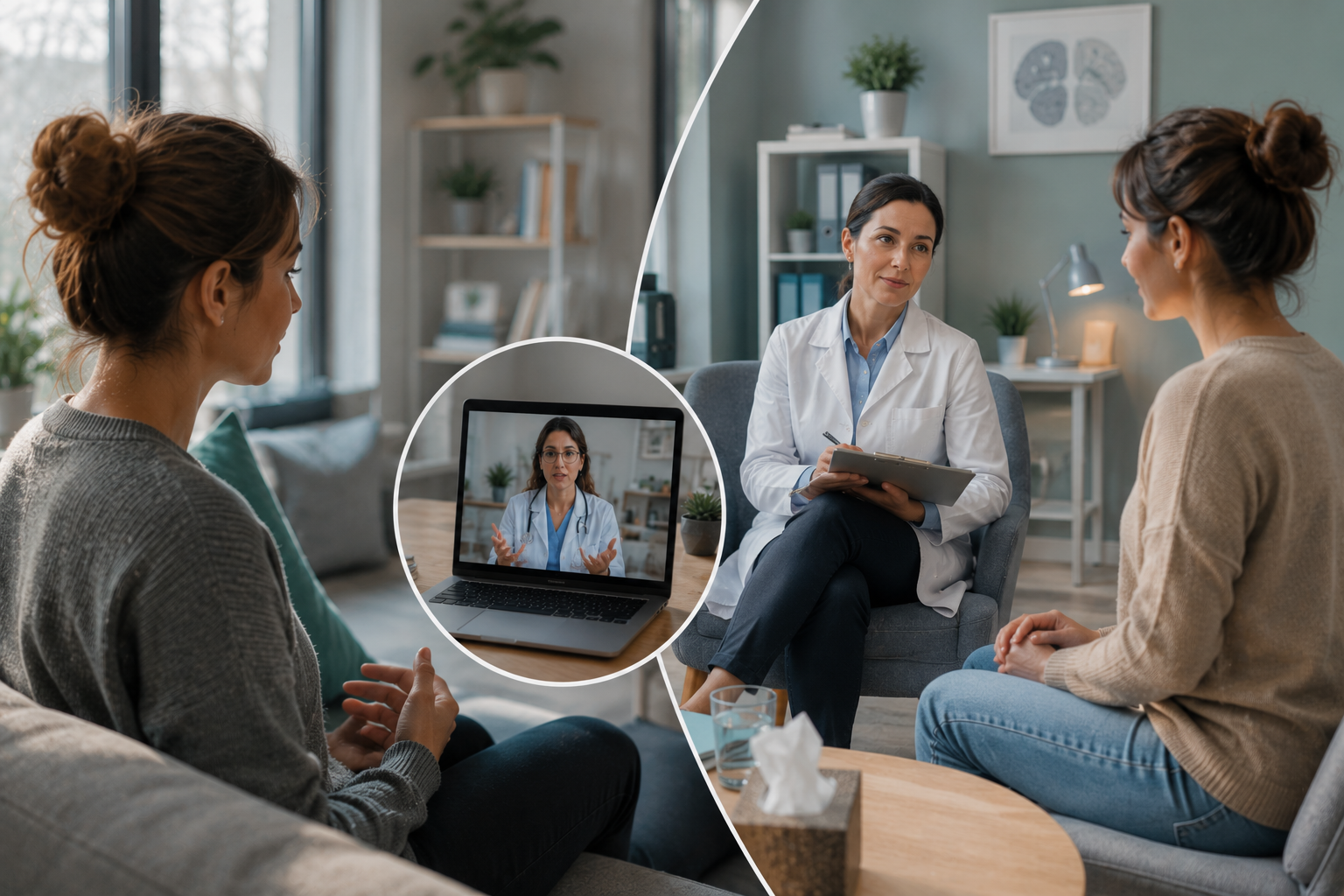
As mental health care evolves, providers and organizations are recognizing that a one-size-fits-all approach rarely serves every patient well. Some situations call for the convenience of remote video sessions, while others benefit from face-to-face interaction. The hybrid telemedicine model bridges these two worlds, blending video-based psychiatric care with in-person visits to match each patient’s clinical needs. Providers such as FasPsych offer this flexible approach alongside fully remote options across a wide range of care settings. Understanding when and why a hybrid model makes sense is valuable for any organization seeking to deliver psychiatric care that is both accessible and clinically appropriate for its patient population.
What Hybrid Telemedicine Actually Means
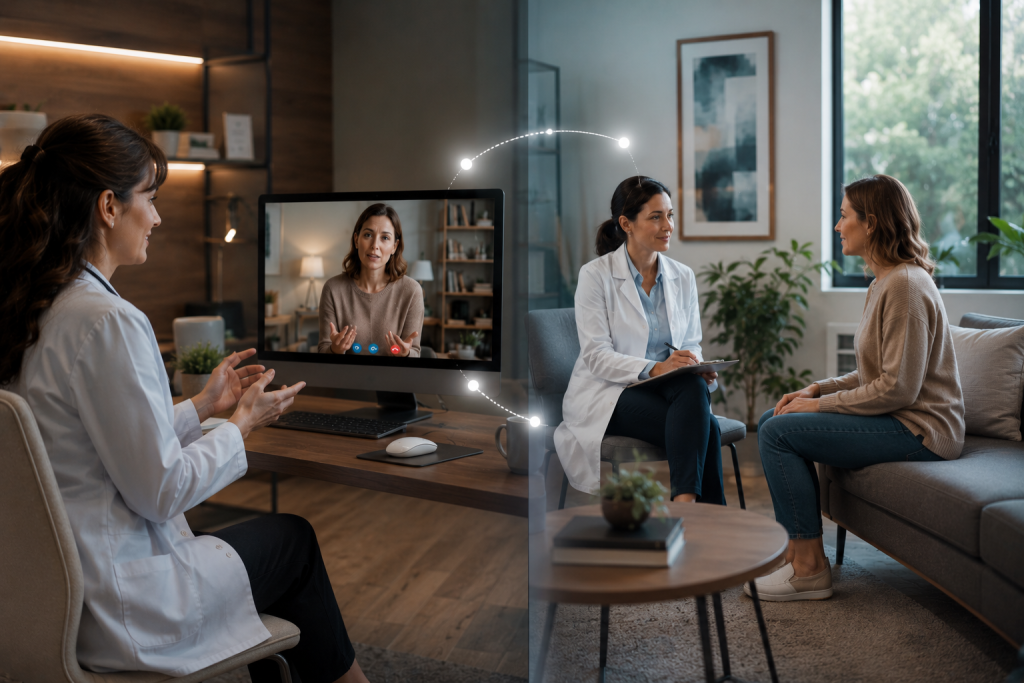
The hybrid model is straightforward in concept but powerful in practice. Rather than committing entirely to remote care or entirely to in-person visits, it allows organizations to combine both methods within a single program. Patients may be seen over video for some appointments and in person for others, depending on their individual circumstances and clinical requirements.
The hybrid approach offers several practical configurations:
- routine follow-ups handled efficiently through video sessions;
- initial evaluations conducted in person when clinically preferred;
- crisis situations addressed with whichever method is faster;
- medication management delivered remotely for convenience;
- complex cases supported with periodic face-to-face visits;
- coverage maintained even when in-person staff are unavailable.
This flexibility is the model’s greatest strength. A patient who is stable on medication may need only occasional video check-ins, freeing up resources, while a patient in a more complex situation might benefit from a combination of remote monitoring and periodic in-person assessment. Organizations are not forced to choose one approach for all patients — they can tailor the delivery method to each clinical situation, optimizing both efficiency and quality of care.
Addressing the Limits of Fully Remote Care
While remote-only telepsychiatry works exceptionally well in many cases, it does have limitations in certain situations. Some patients respond better to in-person interaction, particularly during initial assessments or in complex cases. Certain clinical evaluations may benefit from physical presence. The hybrid model directly addresses these limitations by preserving the option for face-to-face care when it matters, while still capturing the efficiency and accessibility of video sessions for the majority of routine encounters.
Where Hybrid Models Work Best
The hybrid approach proves valuable across a diverse range of care environments. Different settings have different needs, and the ability to blend delivery methods makes the model adaptable to situations where a single approach would fall short.
Hybrid telemedicine commonly serves these settings:
- Hospitals requiring both routine and on-site psychiatric coverage.
- Clinics balancing efficiency with patient preferences.
- Correctional facilities with security and access considerations.
- Colleges and universities serving student populations.
- Counseling practices needing psychiatric medication support.
- Residential treatment centers with varied patient needs.
Correctional facilities offer a clear example of the model’s value. Security considerations and logistical challenges often make in-person psychiatric visits difficult to schedule, yet some situations require physical presence. A hybrid arrangement allows routine care to proceed efficiently over video while preserving in-person capability when truly necessary. Similarly, counseling practices that provide therapy but lack psychiatric prescribing capability can integrate hybrid psychiatric support, combining the strengths of both delivery methods to serve their clients fully.
Integration With Existing Care
One of the most practical applications of the hybrid model is augmenting existing services. Many counseling practices have skilled therapists but no psychiatrist to handle medication management. By integrating hybrid psychiatric support, these practices can offer comprehensive care without hiring full-time psychiatric staff. The psychiatric provider handles medication and evaluations through a blend of video and in-person visits, while the existing therapists continue their work. This integration extends the capabilities of organizations that would otherwise need to refer patients elsewhere for psychiatric needs.
Choosing a Provider for Hybrid Care
Organizations considering a hybrid model should evaluate potential partners carefully. The ability to deliver both remote and in-person care requires a provider with the right infrastructure, network, and operational flexibility to support both methods seamlessly.
Important factors when evaluating providers:
- the ability to provide both remote and in-person coverage;
- a network large enough to ensure consistent availability;
- qualified providers across relevant psychiatric specialties;
- technology that integrates with existing systems;
- flexible staffing arrangements to match fluctuating needs;
- consistent providers who build relationships over time;
- responsiveness when coverage needs change.
Among the various telepsychiatry companies in the market, those that offer genuine hybrid capability stand apart from purely remote services. A provider should be able to supply not only video-based care but also in-person psychiatrists for situations that require physical presence, whether for long-term or temporary needs. This dual capability gives organizations the confidence that they can address any clinical situation that arises, rather than being limited to one delivery method when circumstances change unexpectedly.
The Value of Consistency
Continuity of care remains essential regardless of delivery method. Quality providers ensure patients see the same psychiatric professional across both video and in-person visits, rather than rotating through different providers. This consistency allows the provider to build familiarity with each patient’s history and circumstances, which directly supports better clinical outcomes. The therapeutic relationship matters in psychiatry, and a well-designed hybrid program preserves that relationship across whatever delivery method a given appointment requires.
Benefits for Organizations and Patients
The hybrid model delivers advantages that neither fully remote nor fully in-person care can match on its own. By combining the strengths of both approaches, it offers a balanced solution that serves the practical realities of modern psychiatric care.
The hybrid approach provides clear benefits:
- maximum flexibility to match care to clinical needs;
- expanded access through efficient video sessions;
- preserved in-person capability for complex situations;
- cost efficiency by paying only for time spent with patients;
- continuity through consistent dedicated providers;
- adaptability as patient needs evolve over time;
- integration with existing teams and workflows.
For organizations, the model offers a cost-effective way to ensure comprehensive psychiatric coverage. Comprehensive telepsychiatry services that include hybrid options mean a facility pays only for the actual time providers spend with patients, avoiding the expense of full-time positions while still maintaining access to in-person care when needed. For patients, the benefit is care that adapts to their individual situation — the convenience of remote sessions when appropriate, combined with the reassurance of face-to-face interaction when it genuinely matters for their treatment.
Hybrid telemedicine represents a thoughtful evolution in psychiatric care delivery, recognizing that flexibility serves patients better than rigid adherence to a single method. Organizations seeking to expand their psychiatric capabilities should evaluate partners who can genuinely deliver both remote and in-person care with consistency and quality. As mental health demand continues to grow, the hybrid approach offers a practical path to providing care that is accessible, clinically appropriate, and adaptable to the diverse needs of real patient populations. For any facility weighing its options, a partner with true hybrid capability is well worth serious consideration.